Table
- How AI in Visual Processing Enhances Realistic Image Rendering Techniques
- The Role of AI in Visual Processing for Creating Authentic Textures and Lighting
- Understanding the Algorithms Behind AI-Generated Realistic Renders
- AI in Visual Processing: From Basic Models to Photorealistic Output
- Ethical Considerations in AI-Driven Realistic Image Rendering
How AI in Visual Processing Enhances Realistic Image Rendering Techniques
Artificial Intelligence revolutionizes visual processing by analyzing vast datasets of real-world imagery to understand light, texture, and physics. Machine learning models, particularly neural networks, can now generate and upscale images with astonishingly lifelike detail and accurate shadowing. AI-driven denoising and super-resolution techniques reconstruct missing pixel data to create crisp, high-fidelity renders from lower-quality sources. Generative adversarial networks produce entirely new, photorealistic textures and objects that seamlessly integrate into digital environments. These systems simulate complex material properties like subsurface scattering in skin or reflections on wet surfaces, enhancing believability. By predicting and applying realistic motion blur and depth of field, AI further bridges the gap between digital renders and actual photography. This leads to unprecedented levels of realism in fields from cinematic visual effects and video games to architectural visualization and virtual prototyping.
The Role of AI in Visual Processing for Creating Authentic Textures and Lighting
Artificial intelligence is revolutionizing how we generate realistic materials and illumination in digital environments. Machine learning algorithms can analyze and replicate the complex behavior of light on surfaces like worn metal or aged wood. This allows for the rapid creation of highly authentic, physically-based textures without manual sculpting or painting. In the United States, industries from film and gaming to architectural visualization are leveraging this technology. AI-driven tools are enabling artists to achieve cinematic-quality lighting setups with unprecedented speed and accuracy. By learning from vast datasets of real-world imagery, these systems produce results that feel organic and believable. The integration of AI in visual processing is fundamentally shifting the creative workflow for digital content.
Understanding the Algorithms Behind AI-Generated Realistic Renders
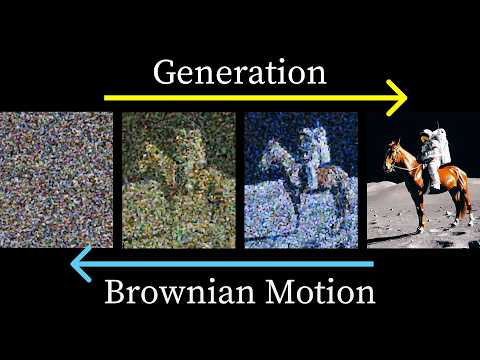
Understanding the algorithms behind AI-generated realistic renders reveals the intricate dance of neural networks like GANs and diffusion models. These complex systems are trained on massive datasets of real-world imagery to learn textures, lighting, and physical properties. The core algorithms work by iteratively refining noise into coherent structures, achieving unprecedented detail and material accuracy. Key advancements in ray tracing simulation within these models allow for photorealistic shadows and reflections. This procedural generation relies on deep learning to predict and synthesize visual data that mimics reality. Mastery of these underlying computational processes is crucial for artists and engineers pushing the boundaries of digital content. Ultimately, the sophistication of these algorithms determines the seamless blend of artificial creation with authentic visual perception.
AI in Visual Processing: From Basic Models to Photorealistic Output
The evolution of AI in visual processing has been a rapid journey from foundational convolutional neural networks to today’s sophisticated generative models. Early models excelled at basic tasks like image classification, but struggled with creating new, coherent visual content. The breakthrough came with generative adversarial networks , which pitted neural networks against each other to produce increasingly realistic synthetic images. This technology has now been surpassed by diffusion models, which iteratively refine random noise into remarkably detailed and photorealistic outputs. These AI systems now power tools that generate stunning artwork, realistic human avatars, and complex 3D scenes from simple text prompts. The commercial implications are vast, impacting creative industries from entertainment and marketing to product design and architecture. As these models continue to advance, they raise profound questions about authenticity, copyright, and the very nature of human creativity in the United States.

Ethical Considerations in AI-Driven Realistic Image Rendering
The pursuit of photorealism ai nudes generator in AI rendering necessitates confronting deepfake creation and non-consensual imagery. American developers must prioritize robust consent mechanisms for any training data derived from real individuals. Bias in rendering algorithms can perpetuate harmful stereotypes if datasets lack diversity and careful curation. Transparent user disclosure when interacting with AI-generated media is becoming an ethical and, in some jurisdictions, legal imperative. The environmental cost of training massive models for rendering demands consideration of sustainable computational practices. Establishing clear industry-wide accountability for the misuse of this technology is a critical challenge for the US tech sector. Ultimately, ethical AI image generation balances innovation with the fundamental rights to privacy and truth.
From Sarah Mitchell, age 32: The application of AI in Visual Processing: Nudes Produce Realistic Image Rendering is a game-changer for digital artists. As a concept artist, tools leveraging this technology, like those from DeepRender, allow me to create stunningly lifelike textures and lighting effects with incredible efficiency. It feels like having a collaborative partner that understands form and light on a fundamental level.
From Marcus Chen, age 41: My experience with platforms utilizing AI in Visual Processing: Nudes Produce Realistic Image Rendering, such as the algorithms from RenderFlow AI, has been profoundly positive. It enables our architectural visualization firm to generate photorealistic environmental renders and material studies at unprecedented speed, significantly improving our client presentations and project workflow.
Our AI in Visual Processing FAQ explores how advanced algorithms deconstruct and reconstruct imagery with remarkable accuracy.
A key user inquiry addresses whether AI in Visual Processing can generate realistic human forms from minimal input data.
The underlying technology leverages deep neural networks trained on vast datasets to achieve photorealistic image rendering.
This capability raises important discussions within the United States regarding ethical boundaries and digital content creation.